
A brand new report commissioned by an trade foyer group on the federal authorities’s proposed emissions cap stirred up robust reactions from each oil and fuel supporters and environmental teams on Monday.

The report, by S&P International Commodity Insights, was commissioned by the Canadian Affiliation of Petroleum Producers to look at the influence of varied proposed emissions-reducing insurance policies on Canada’s typical (non-oilsands) oil and fuel producers.
Its conclusions Monday have been used to assist the trade argument that legislating an emissions ceiling will inhibit funding and development, whilst opponents argued the report’s methodology was flawed.
The commissioned report concludes that if oil and fuel drillers have been required to chop greenhouse fuel emissions by 40 per cent by 2030, trade may see $75 billion much less in capital funding over the course of the subsequent 9 years in contrast with present coverage situations.
The research says that might translate to 1 million barrels of oil equal much less of manufacturing per day by 2030 in contrast with present forecasts, and 51,000 fewer jobs by 2030 than below current authorities insurance policies.
The findings align with what Canada’s oil and fuel sector has lengthy been saying — that the federal authorities’s proposed cap on emissions from the trade will quantity to a de facto cap on fossil gas manufacturing.
On Monday, CAPP president Lisa Baiton stated the brand new report is proof {that a} federally mandated emissions cap “mustn’t proceed.”
“Declines in manufacturing pressured on the trade by a stringent emissions cap will lead to important job losses for Canadians, extreme impacts on the economic system and our GDP, and have the potential to compromise Canada’s power safety and prosperity,” Baiton stated.

However the federal authorities has stated all alongside that the oil and fuel emission cap might be designed to restrict emissions, not oil and fuel manufacturing.
The federal government has stated the design of the emissions cap will consider different laws, akin to Canada’s dedication to cut back oil and fuel methane emissions by no less than 75 per cent by 2030, in addition to complementary local weather insurance policies by federal and provincial governments.
Breaking information from Canada and world wide
despatched to your e mail, because it occurs.
And the hypothetical eventualities the CAPP-commissioned report examines don’t use the identical targets the federal authorities truly proposes in its draft emissions framework, launched final December.
Below the proposed framework, the sector must lower greenhouse fuel emissions by 35 to 38 per cent from 2019 ranges by 2030.
The sector would even have the choice to purchase offset credit or contribute to a decarbonization fund that might decrease that requirement to chopping simply 20 to 23 per cent.
“CAPP has commissioned an evaluation of a non-existent situation. The whole lot in it flows from false assumptions that make it so deeply flawed, it quantities to disinformation,” stated Oliver Anderson, spokesman for Surroundings Minister Steven Guilbeault, in an e mail.


CAPP says its sponsored research provides within the projected influence of the federal authorities’s draft methane laws, which might require no less than a 75 per cent discount of oil and fuel methane emissions beneath 2012 ranges by 2030, and takes under consideration that the insurance policies haven’t been finalized and stay unsure.
Environmental teams have been fast to criticize the report’s methodology. Clear power think-tank The Pembina Institute stated the CAPP report consists of solely typical oil and fuel drillers and leaves out oilsands manufacturing, which accounts for the overwhelming majority of the trade’s emissions profile.
The Pembina Institute added that with regards to methane, which is the place the majority of typical drillers’ emissions come from, important reductions could be made utilizing already current, cost-effective applied sciences.
“Pembina Institute analysis demonstrates that the proposed 2030 emissions cap could be feasibly met by the oil and fuel trade, nearly totally via a mixture of methane reductions (which might principally come from the traditional sector) and the Pathways Alliance’s 2030 emissions discount plan (for the oilsands),” the think-tank said in a launch.
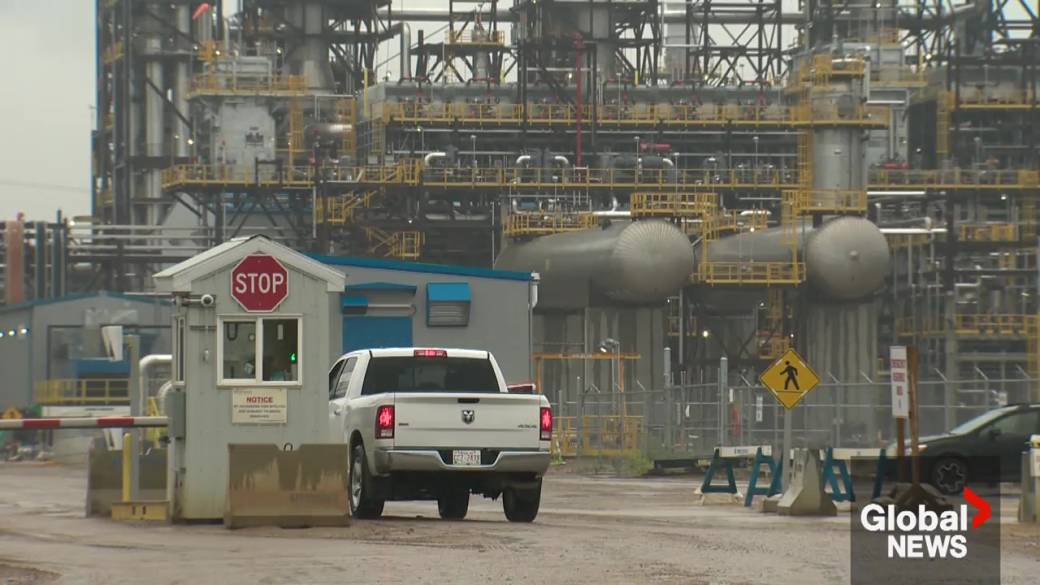
Whereas the oil and fuel sector is Canada’s heaviest-emitting trade, the majority of these emissions come from the oilsands sector — the place rising manufacturing is contributing to elevated to whole emissions.
Emissions from the traditional sector, which the CAPP studies focuses on, have been declining since 2014.
Alberta Premier Danielle Smith additionally waded in Monday, issuing a joint assertion with the province’s surroundings and power ministers wherein she referred to the proposed cap as a “reckless gamble that can devastate Canadian households and do nothing to cut back world emissions.”
© 2024 The Canadian Press